
Clamping and Releasing the Workpiece in a Manual Vice
The Game Changer for CNC Machine Automation
The Problem
CNC automation cannot function by merely ordering a robot and commissioning an integrator. The question is: Who or what clamps the vice in a fully automated production process? And who or what releases it again?
The Solution
The CLAMPBOOSTER handles this. It extends the robot with a drive for the vice, enabling the robot to perform highly precise clamping operations with manual vices quickly and safely.
The existing production process remains untouched and can continue as usual. Thanks to a fully automated CNC production with the CLAMPBOOSTER, without manual components, around the clock.
Model CB-10
Technical Data for the CLAMPBOOSTER
Flexible and individually controlled torque: 5 - 100 Nm
Very short closing and opening time: approx. 5 seconds
Drive: Spin Socket
Blow-off nozzle: integrated
Remote maintenance: integrated
Dimensions "Drive": L x W x H 120mm x 100mm x 100mm
Power supply: 100–240 V AC, 12–5 A, compressed air 5–6.5 bar
Controlled opening width:
Operating mode: electric
Docking Plate: quickly exchangeable
Robot interfaces: analog/digital or Profinet, Ethernet/IP, EtherCAT, Modbus
Software updates: online
Mechanics: maintenance-free
Weight: 1.95 kg
One System. Many Integration Options.
Interfaces for every automation level.
The CLAMPBOOSTER was consistently designed to minimize communication with the robot. This results in a particularly robust, flexible, and easily integrable system that can adapt to different levels of automation – from autonomous solutions to deep integration into existing control architectures. Depending on the application and system environment, three integration levels are available, covering different communication and control requirements:
1. Stand-alone operation (minimally invasive)
The CLAMPBOOSTER operates autonomously. The robot is responsible only for positioning the part in the vise, while all process steps—opening, closing, monitoring, and release—take place directly within the system. Only minimal communication is required to monitor the CLAMPBOOSTER’s status.
2. Control via digital/analog I/O
For more advanced automation solutions that are still controlled by the robot itself, the digital/analog interface is the right choice. Standardized digital inputs/outputs and optional analog channels enable more extensive control that can be implemented on many robot controllers without complex PLC programming.
3. Standard integration via Industrial Ethernet and robot interfaces
Here, the CLAMPBOOSTER is integrated into the automation environment using standard industrial protocols. These include PROFINET, EtherNet/IP, EtherCAT, and Modbus TCP—depending on the system being used.

PROFINET
For seamless integration into your Siemens S7 environment

EtherNet/IP
Compatible with a wide range of automation solutions

EtherCAT
Seamless integration with Beckhoff systems

Modbus TCP
Simple interface, full CLAMPBOOSTER functionality
Manual Vice. Automated Process.
Few Steps to an Automated Clamping Solution.
Step 1
Preparing the Vice
During the clamping process, the CLAMPBOOSTER engages with two dowel pins on the vice, eliminating torsional forces and allowing the robot to operate without stress. The drilling for these two dowel pins is the only necessary preparation of the vice.
Step 2
Mounting on the Robot Arm
For cobots, the CLAMPBOOSTER is screwed between the ISO flange and the gripper. For industrial robots, it is mounted directly on the tool flange of the robot arm.
Step 3
Closing the Vice after Workpiece Loading
After the robot has placed the workpiece in the vice, the robot arm guides the CLAMPBOOSTER directly to the vice. The CLAMPBOOSTER closes it according to the set torque.
Step 4
Opening the Vice after Machining by the Milling Machine
After machining in the milling machine, the CLAMPBOOSTER opens the vice. Finally, the workpiece is unloaded by the robot, and the production process restarts (see Step 3).
Simply, thanks to just one End-of-Arm Tool
Automation thought through - Automation without major investment
Do you have an existing machine? Manual vises or clamping systems? A machine without connections for pneumatic or hydraulic lines? The CLAMPBOOSTER can do it all. Designed as an EOAT, it eliminates the need for complicated, costly retrofitting of the machining center.
No reliance on highly complex systems with maximum efficiency!
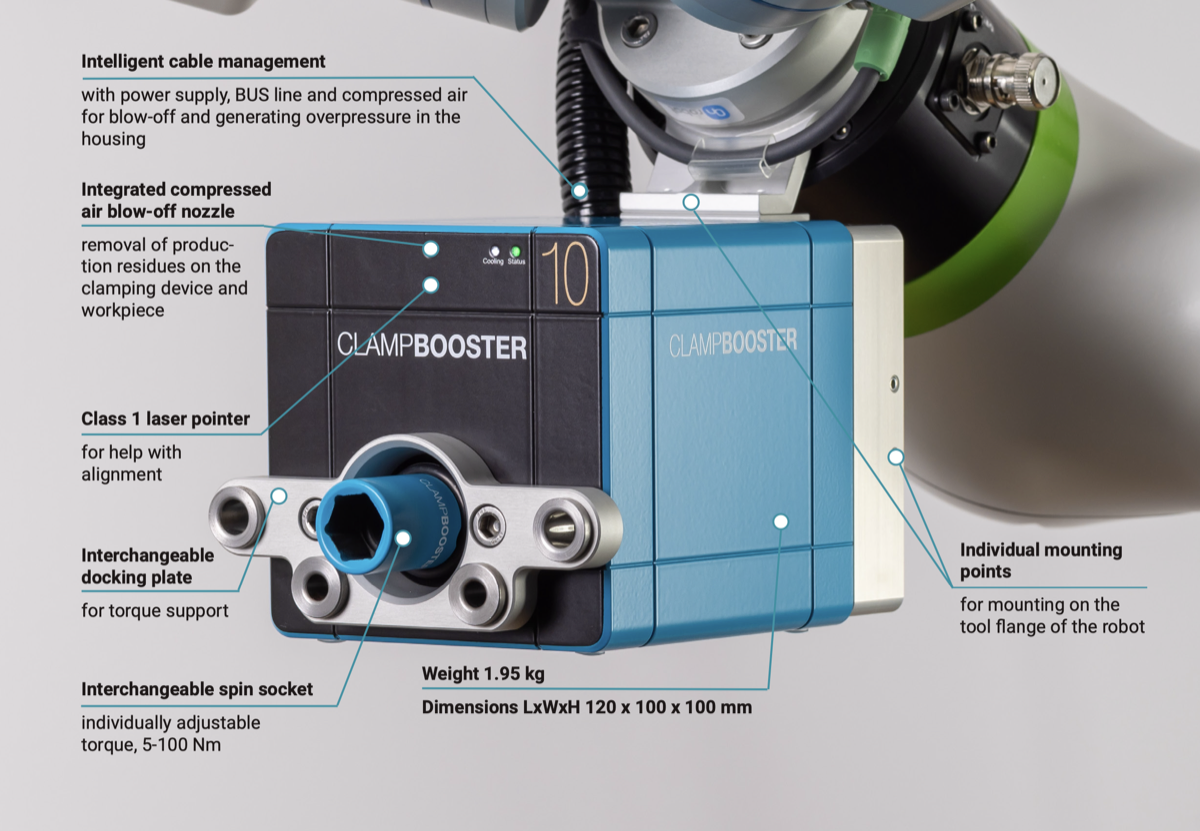
Industrial robot or cobot? Various vice manufacturers, force-amplified systems? Use of multiple vices in one machine? No problem for the CLAMPBOOSTER. Thanks to interchangeable accessories, it is compatible with almost all systems available on the market.
Exact Precision and Intuitive Operation
1.95 kg? 10 x 10 cm? Yes, the torque of up to 100 Nm that the CLAMPBOOSTER can generate is enormous. It operates without placing any load on the robot, and mounting bolts in the vise eliminate torsional forces. The opening stroke of the vise can be precisely specified by programming the spindle revolutions via a software-based control system.
CLAMPBOOSTER Components
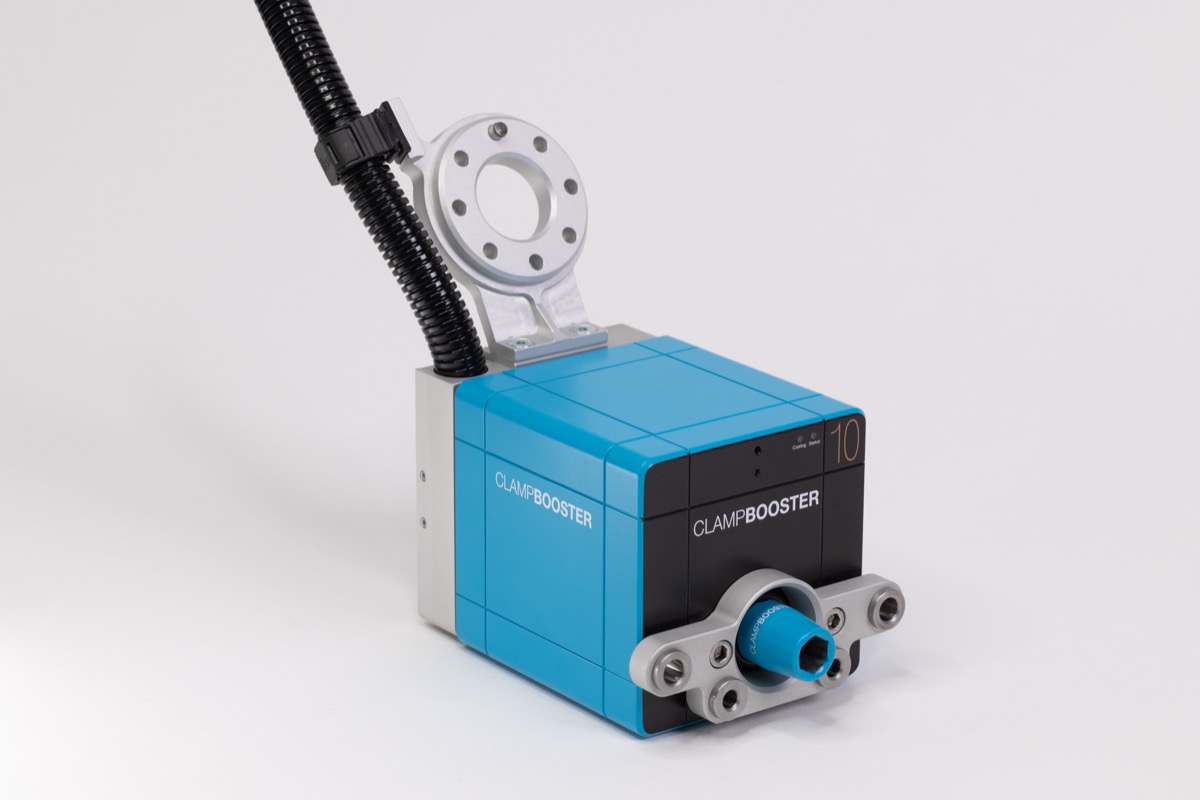
Drive
for Cobots
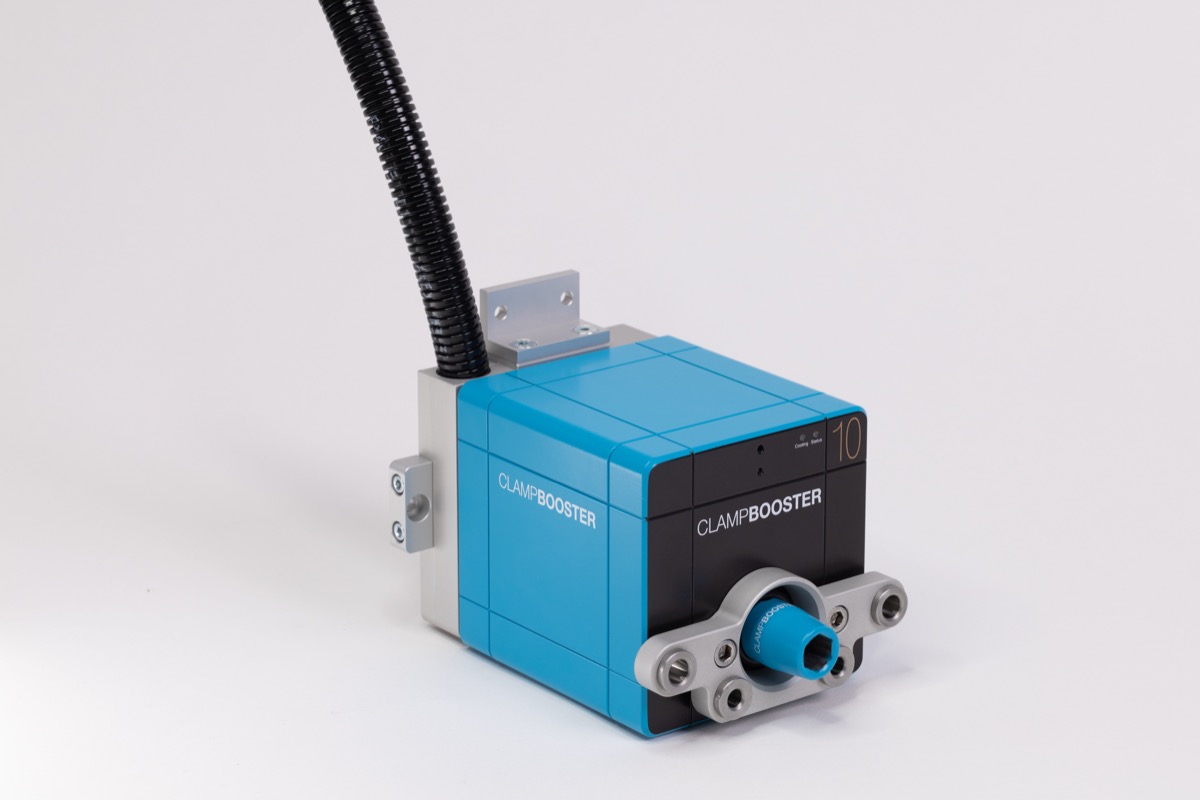
Drive
for Industrial Robots
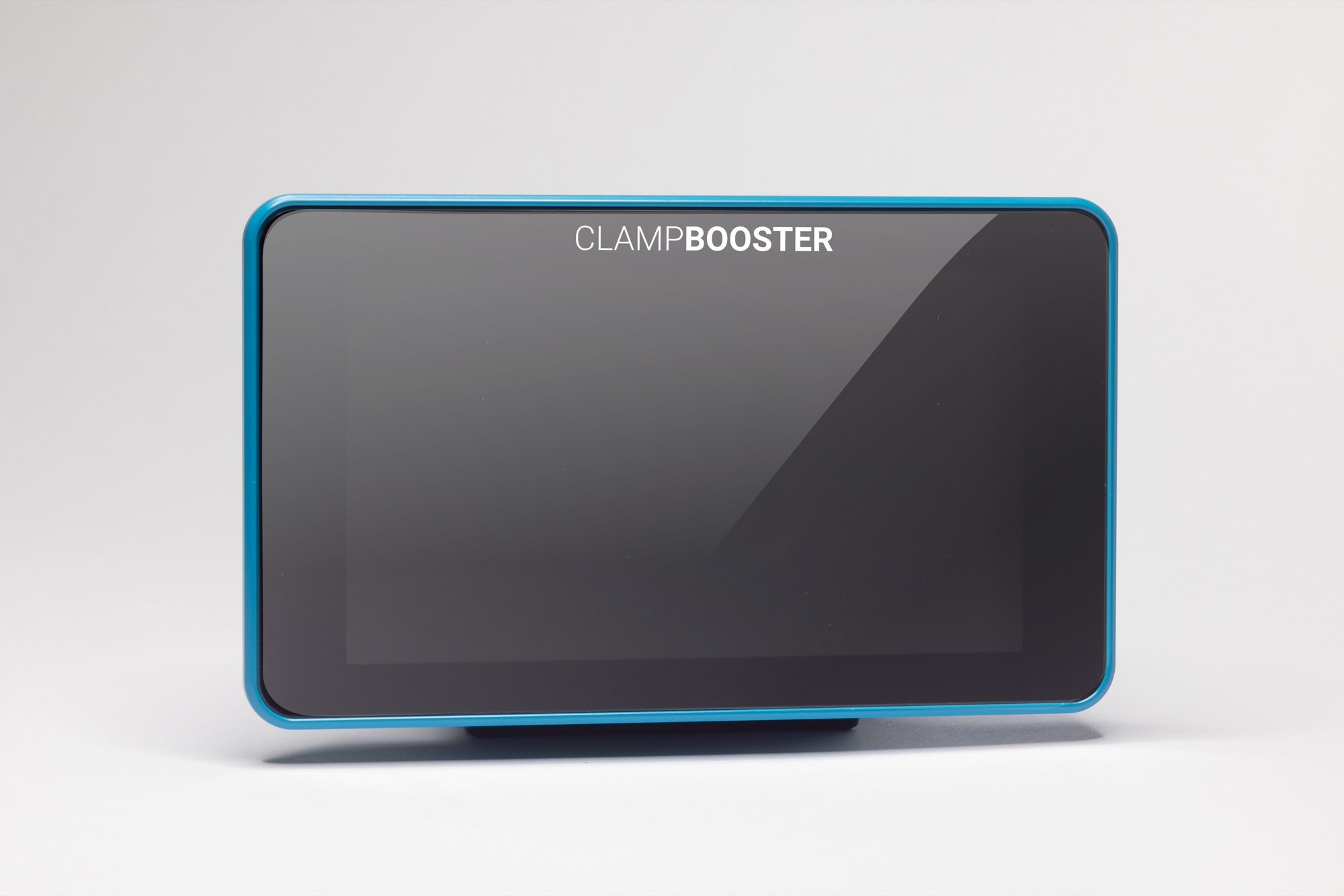
Central Unit
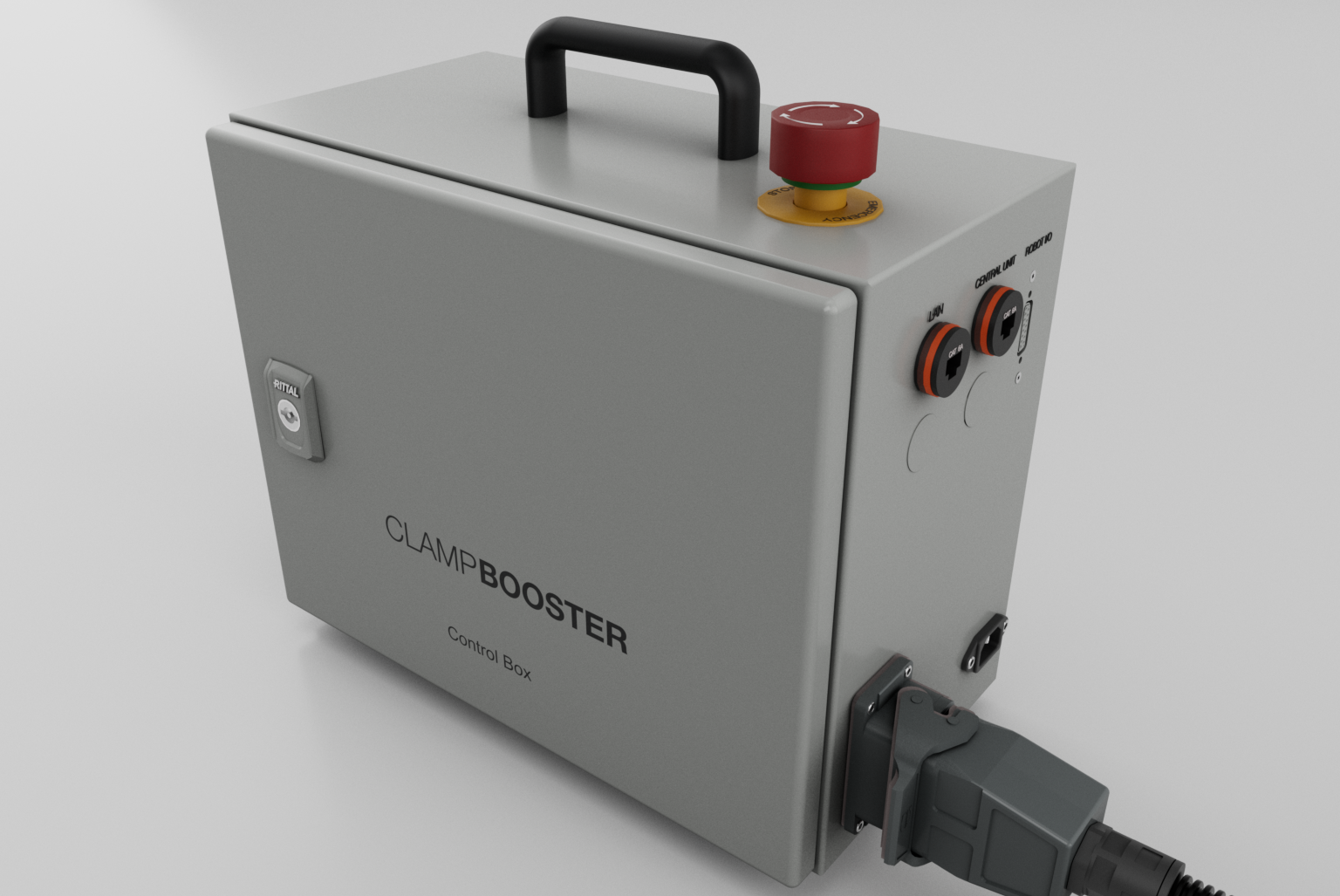
Control Box
Overview of possible accessory adapters
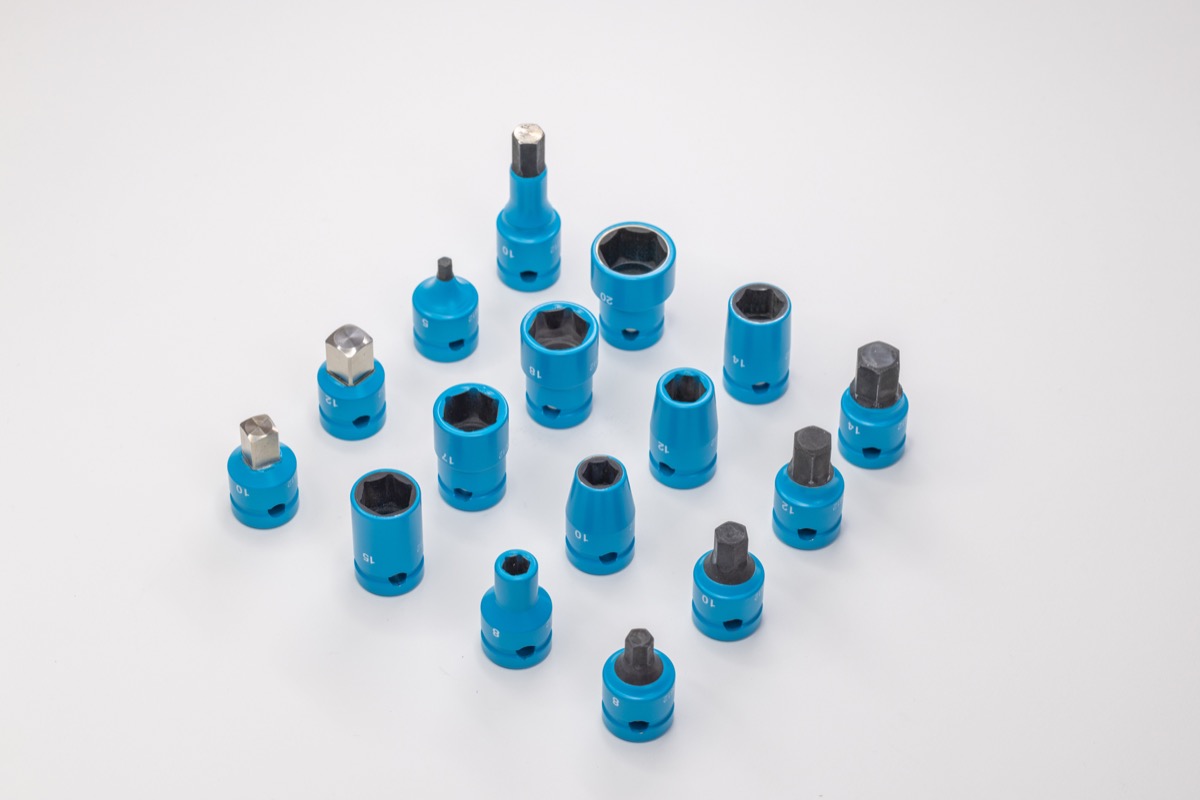
Spin-Socket
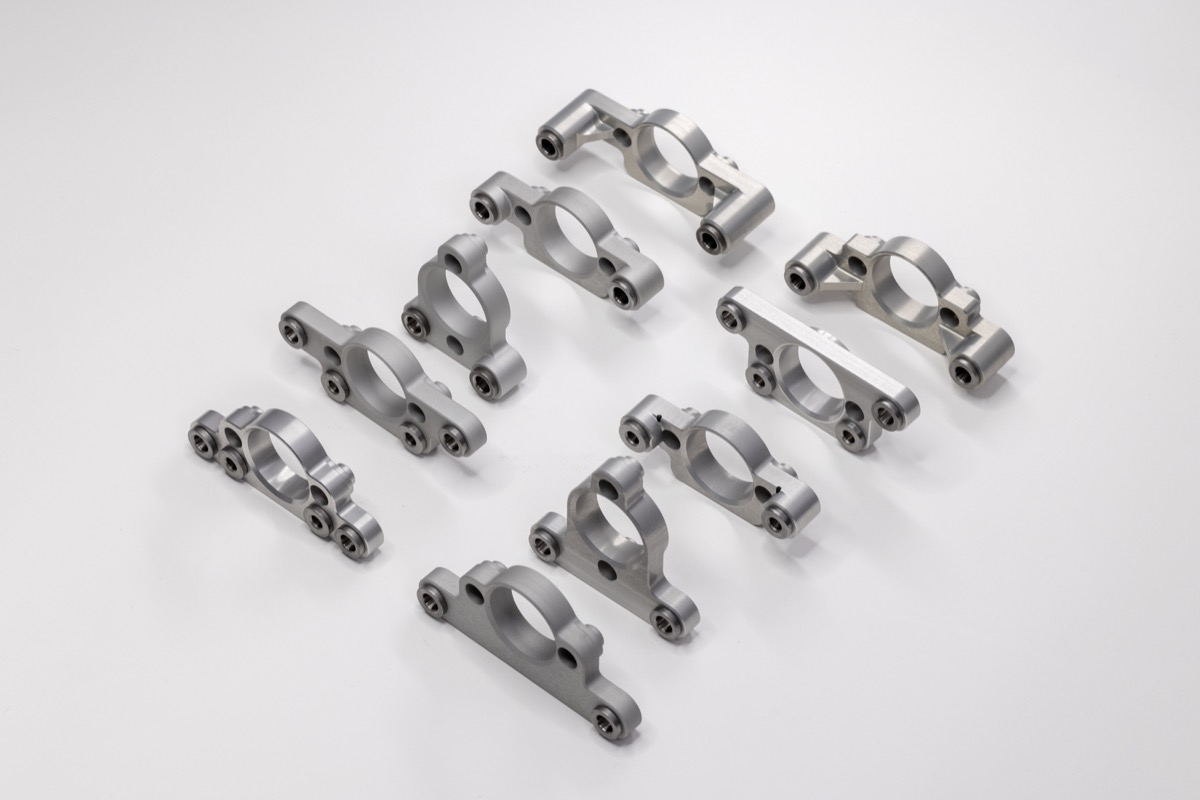
Docking Plate
1.95 kg? 10 x 10 cm?
Yes, the torque that the CLAMPBOOSTER can apply is enormous. It operates without stressing the robot; locating pins in the vice eliminate any torsional forces.